
 Sign in
 Sign up


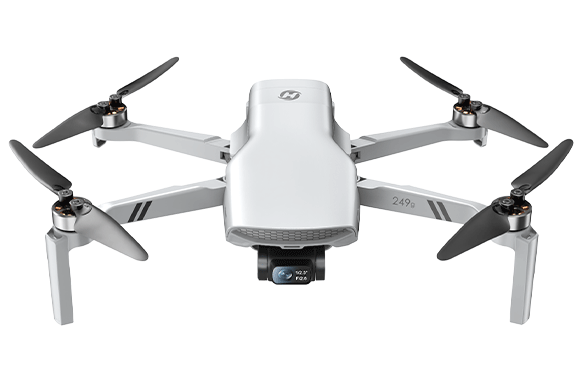
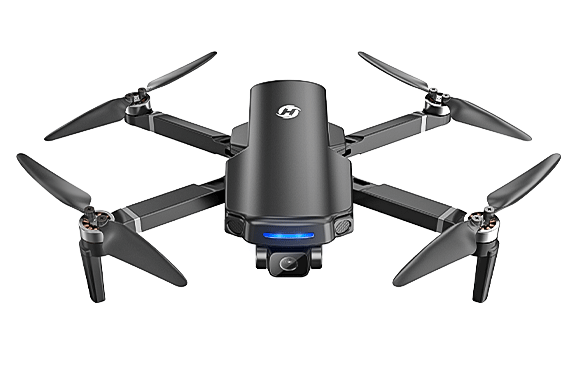
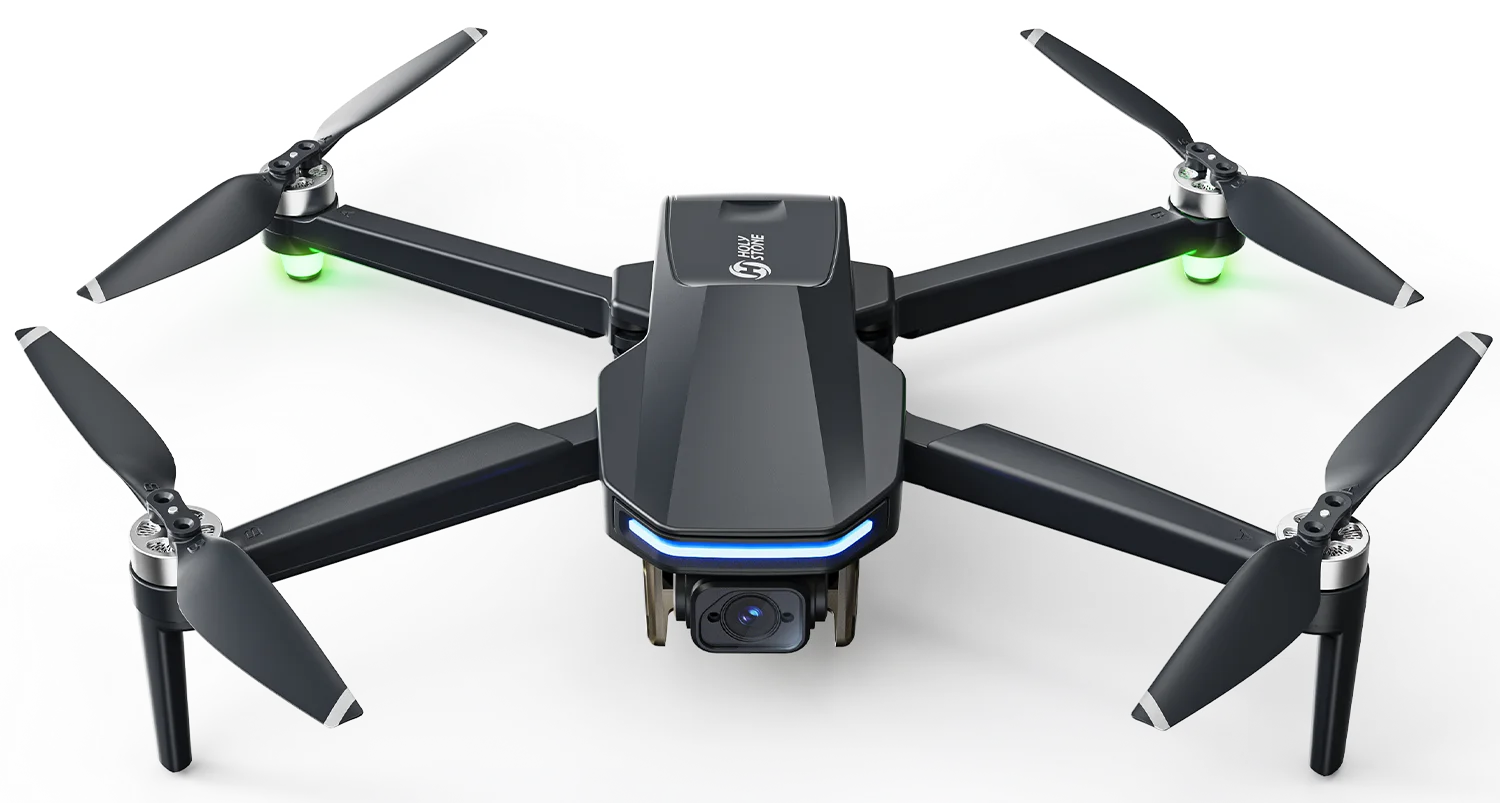
Drones Under 250 Grams: How to Choose the Right One
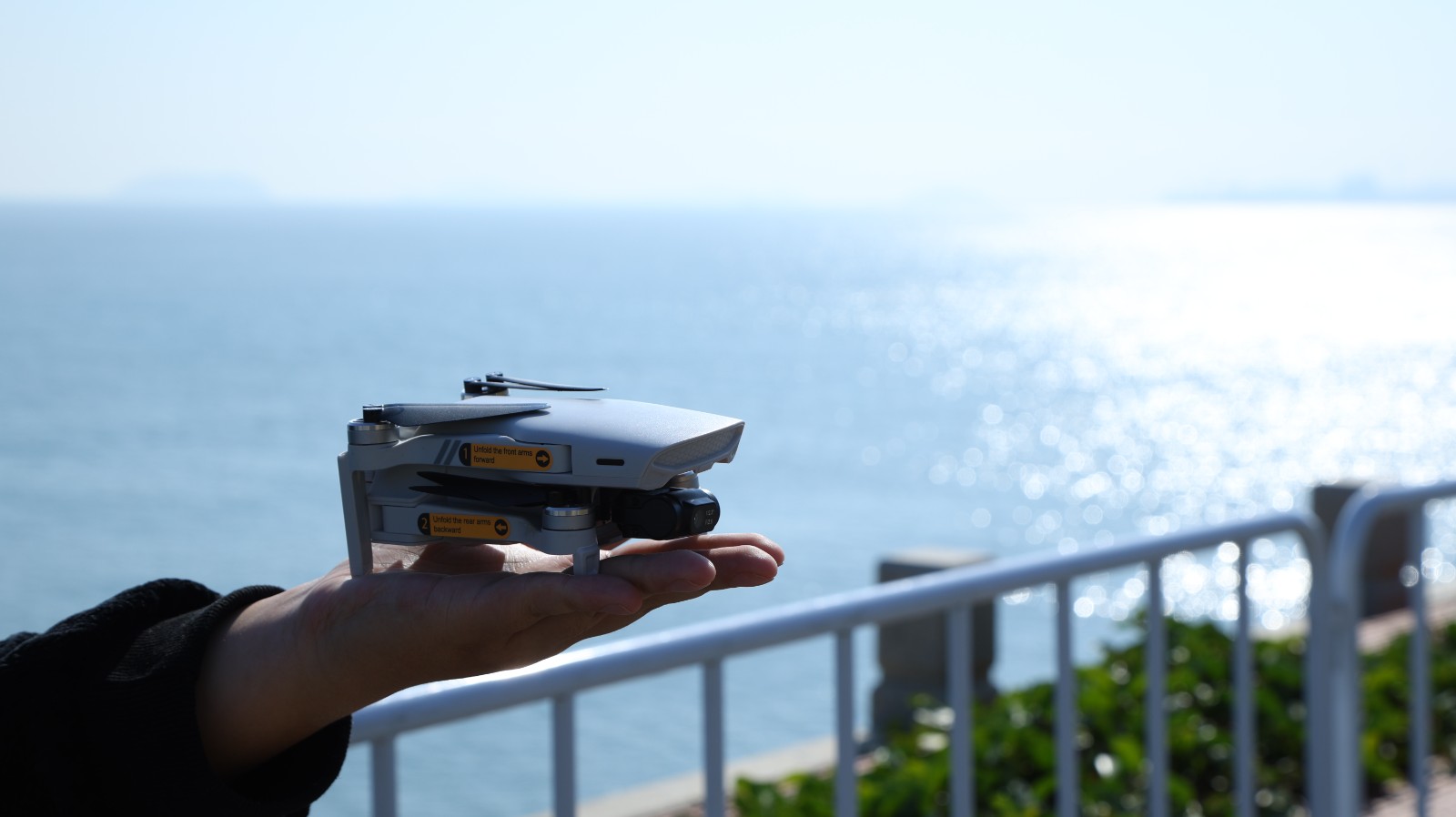
Drones Under 250 Grams: How to Choose the Right One
Less Weight. More Possibilities.
From your first GPS flight to creative aerial photography.
Find your lightweight droneAre drones under 250 grams worth buying?
Yes, especially if you value portability and recreational flying. In the U.S., aircraft weighing 0.55 pounds or less (approximately 249.5 grams) can qualify for an FAA registration exemption when flown exclusively under the recreational exception. Other flying rules still apply.
Weight alone does not determine camera quality, flight time or flying performance. Choose according to what you want to do—not just what the drone weighs.
Find your lightweight drone
Buying your first drone? Planning a weekend trip? Looking for smoother footage without bulky equipment? Start with your priority.
Holy Stone recommendations by flying needs, not an independent market-wide ranking.
Compare all 10 models
| Model | Weight | Onboard video | Camera stabilization | Per battery |
|---|---|---|---|---|
| HS175D | 215g | 2688 × 1512 | Standard camera | Up to 23 min |
| HS175D Plus | 247g | 4K/20fps | Standard camera | Up to 30 min |
| HS175D MAX | 247g | 4K/20fps | Standard camera | Up to 30 min |
| HS175G | 249g | 1440p/30fps | EIS | Up to 30 min |
| HS360S | 249g | 4K/20fps | Standard camera | Up to 20 min |
| HS360E | 249g | 4K/30fps | EIS | Up to 30 min |
| HS360D | 249g | 4K/20fps | Standard camera | Up to 40 min |
| HS360G | 249g | 4K/30fps | 3-axis gimbal | Up to 32 min |
| HS900 | 249g | 4K/30fps | 3-axis gimbal | Up to 30 min |
| HS900 Pro | 249g | 4K/30fps | 3-axis gimbal | Up to 30 min |
Flight times are manufacturer-rated maximums under specified conditions, not guaranteed usable filming time. HS360S currently comes with one battery.
Why does 250 grams matter?
Lightweight aircraft are easier to pack for weekend trips and outdoor photography. In the United States, qualifying recreational flights may also have fewer registration requirements. But a 249g drone can have very different capabilities from another aircraft of the same weight.
U.S. registration, TRUST and Remote ID
| Requirement | Recreational exemption | Part 107 |
|---|---|---|
| Registration | Exempt at 0.55 lb or less | Required regardless of weight |
| Remote ID | Generally not required if exempt and unregistered | Required unless an applicable exception applies |
| TRUST | Required | Not the Part 107 qualification |
| Airspace and visual line of sight | Rules apply | Rules apply, unless otherwise authorized where applicable |
Flight purpose matters, even when no payment is involved. Check FAA recreational rules, registration guidance and our Remote ID guide.
Illustrative example, not an actual product measurement. Weigh the complete flying configuration, including installed battery and accessories.
Do you need Remote ID for your lightweight drone?
For qualifying recreational flights with an unregistered aircraft weighing 0.55 lb or less, you generally do not need Remote ID. If you fly under Part 107, register your drone and check whether it has Standard Remote ID built in. If it does not, a compliant external broadcast module may be an option, unless another applicable exception applies.
Check compatibility, FAA compliance and actual takeoff weight before attaching a module. A module alone does not satisfy all operating requirements. See the FAA Remote ID guidance.
Your first GPS drone: where do you want to fly?
Start with a drone that fits your flying space and learning goals. For short practice flights near home, a compact GPS model is enough. If you also plan to explore spacious parks or open fields where flying is permitted, a stronger transmission system gives you more connection headroom.
Illustrated flying environments, not distance demonstrations. Check local rules and maintain visual line of sight.
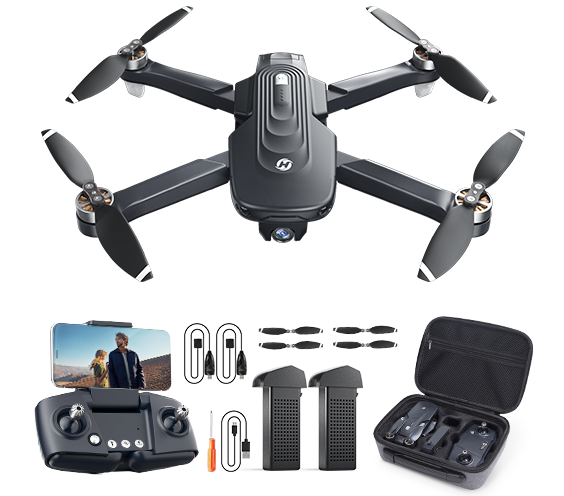
HS175D
- Backyard GPS practice
- Easy hovering & landing
- Ultra-light 215g design
215g · 500m control / 300m FPV
View product →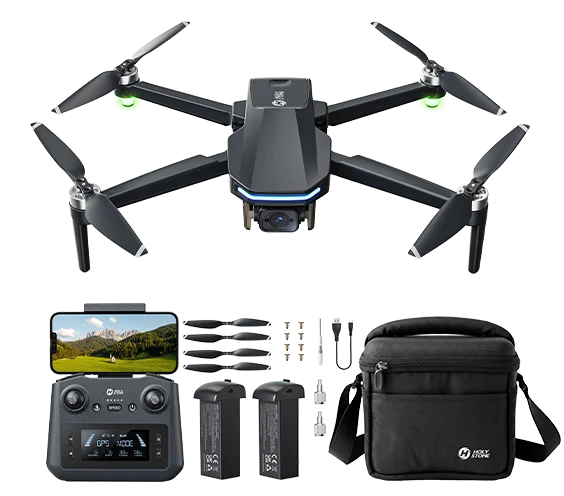
HS175D Plus
- Backyard & nearby open spaces
- Onboard 4K video
- Longer flight time: up to 30 min/battery
247g · 1km control / 500m FPV
View product →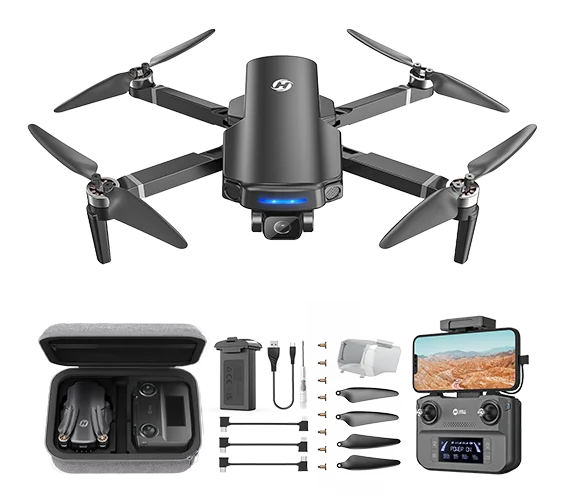
HS360S
- Backyard, parks & open fields
- Onboard 4K video
- Wired phone live view
249g · 3km control / 3km FPV · Up to 20 min (1 battery)
View product →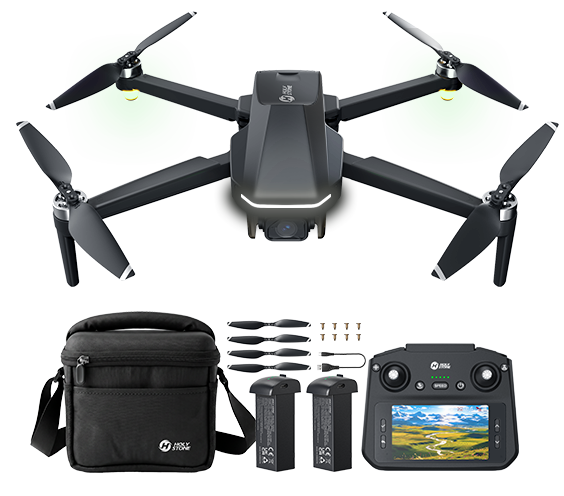
HS175D MAX
- Backyard, parks & open fields
- 4.5-inch dedicated screen
- No phone calls or notifications on screen
247g · 3km control / 3km FPV
View product →Choose your flying space and controller
| Model | Control range | FPV range | Controller | Best suited to |
|---|---|---|---|---|
| HS175D | 500m | 300m | Standard | Near-home practice |
| Plus | 1km | 500m | Standard | Near-home practice and nearby open spaces |
| HS360S | 3km | 3km | Standard · wired phone | Near home, permitted parks and open fields |
| MAX | 3km | 3km | 4.5-inch screen | Near home and open spaces · dedicated screen |
Rated maximum transmission distances under specified conditions, not recommended or permitted flying distances. Maintain visual line of sight, check local park rules and airspace restrictions, and choose a safe open area away from people and obstacles.
Learn more in our screen controller drone guide.
Not all 4K drones are the same
The same 4K label does not mean the same flying or viewing experience. Higher prices can reflect better stabilization, sensors, flight time or controllers. Choose the features that matter to your purpose.
4K
Clear aerial detail for learning and practical recording. Aircraft movement can be visible in footage.
HS360S · HS360D
4K + EIS
Less visible shake for a more enjoyable aerial imaging experience, without a mechanical gimbal.
4K + 3-Axis
More consistent camera orientation for smooth scenic footage and creative video.
4K refers to camera capability in these groups, not necessarily onboard 4K video: HS175D records 2688 × 1512 video and HS175G records 1440p/30fps video. See the comparison table for recording modes.
What is worth paying extra for?
Pay for the experience you want, not just the specifications. A higher price does not automatically make a drone easier to fly.
- GPS assistance
- Position holding and return-to-home support.
- EIS
- Smoother recorded footage for hobby flying.
- 3-axis gimbal
- More consistent camera orientation for creative video.
- Longer endurance
- Fewer battery changes during exploration or documentation.
- Transmission headroom
- More connection capability, not permission to fly farther.
- Dedicated screen
- Live view without personal phone distractions.
- Camera sensor & frame rate
- Potential for more detail and smoother motion, depending on conditions.
Which is the best choice for you?
Your flying experience and purpose matter more than buying the most expensive camera.
Learn to fly
Enjoy the flight
Document your work
Create better videos
EIS improves recorded footage; live-view stabilization varies by model. Rated battery endurance is under specified conditions; 80 minutes is combined across two batteries, not continuous flight. Keep a safe reserve. In the U.S., non-recreational documentation generally falls under Part 107. These are use-case recommendations, not controlled flight-test results.
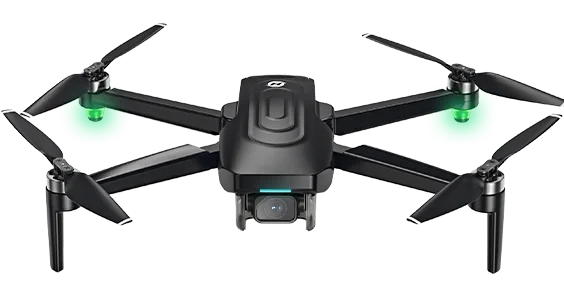
HS175G
- GPS-assisted recreational flying
- EIS for a more rewarding visual experience
- Up to 30 min per battery
249g · 1440p/30fps
View product →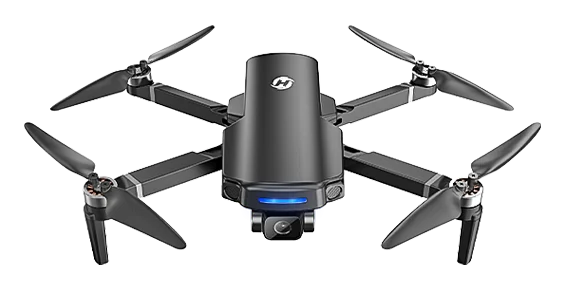
HS360S
- Learn GPS flight controls
- Onboard 4K video
- Wired smartphone live view
249g · 4K/20fps · Up to 20 min (1 battery)
View product →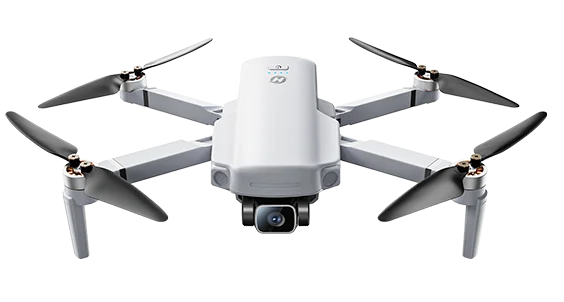
HS360E
- EIS for recreational aerial imaging
- Onboard 4K/30fps video
- Up to 30 min per battery
249g · 4K/30fps
View product →See the three camera systems in action
Watch how the aircraft moves, how the horizon behaves and what the footage looks like during turns. Choose the experience you value, rather than resolution alone.
HS360S
Learn to Fly
Reviewer insights · Summarized from the video
- Easy to learnGPS-assisted beginner flight
- Smoother motionTry 2.7K/30fps
- Flying tipUse slow, gentle turns
HS360E
Enjoy the Flight
Reviewer insights · Summarized from the video
- EIS upgradeLess visible shake
- Know the limitHorizon can still tilt in wind
- Holy Stone recommendationRecreational aerial imaging
HS360G
Create Better Footage
Reviewer insights · Summarized from the video
- 3-axis gimbalMore stable camera orientation
- Level horizonReduces aircraft-tilt effects
- Holy Stone recommendationScenic video and creative shots
These are separate flight reviews, not a controlled side-by-side comparison. Conditions and camera settings may differ.
These independent video reviews illustrate different camera systems in real flights, not a side-by-side test under identical conditions.
Why does footage look different on my phone?
Live view may have a lower resolution than onboard recordings. Use a supported memory card and the appropriate camera settings, then transfer the original files before editing or sharing.
For better footage, start with a stable hover, slow forward movement and gentle direction changes. Camera quality also depends on light, sensor performance and recording settings.
Fly smarter, not farther
Can GPS drones still fly away?
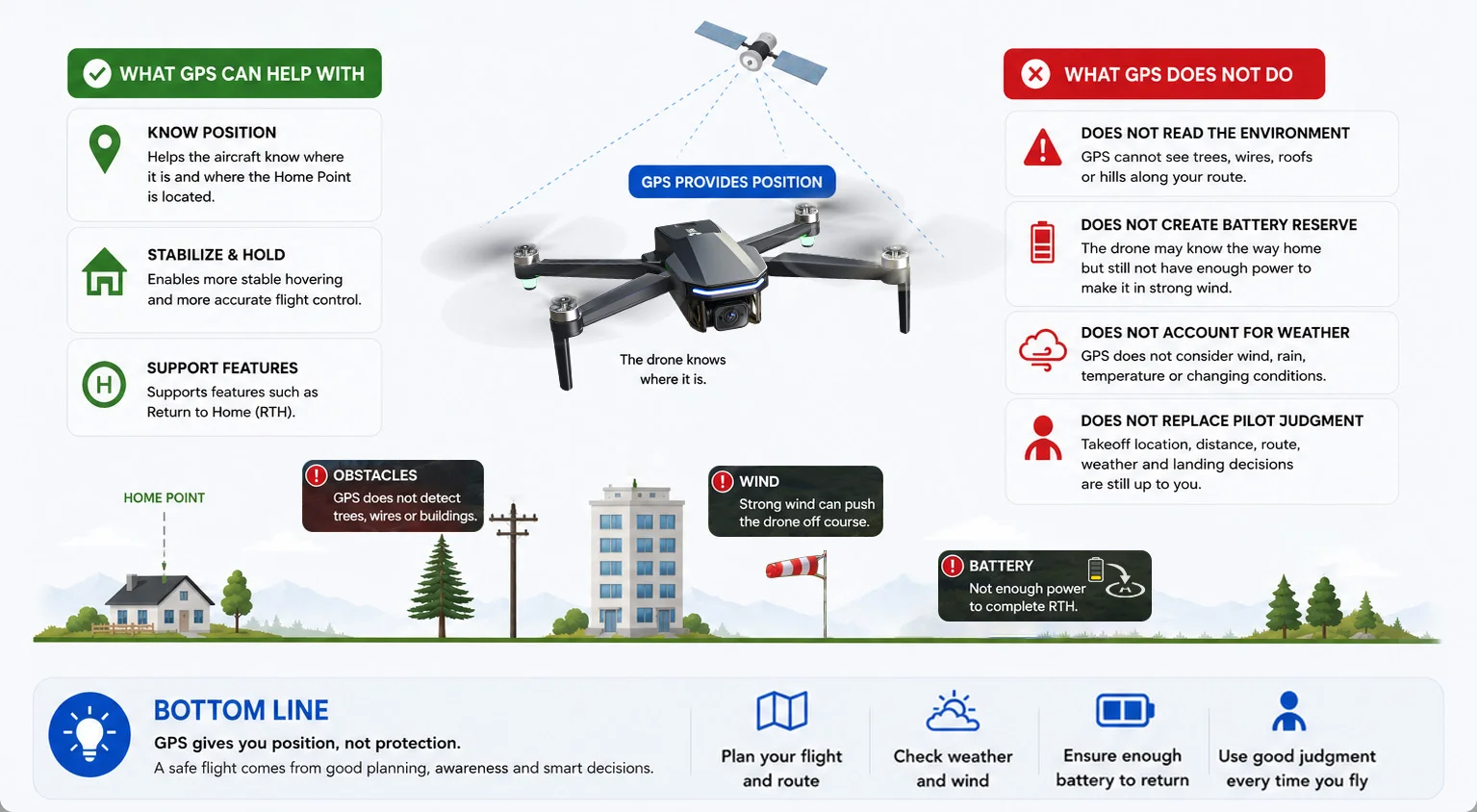
GPS and return-to-home assist navigation and recovery, but cannot guarantee a safe return.
Can lightweight drones fly in wind?
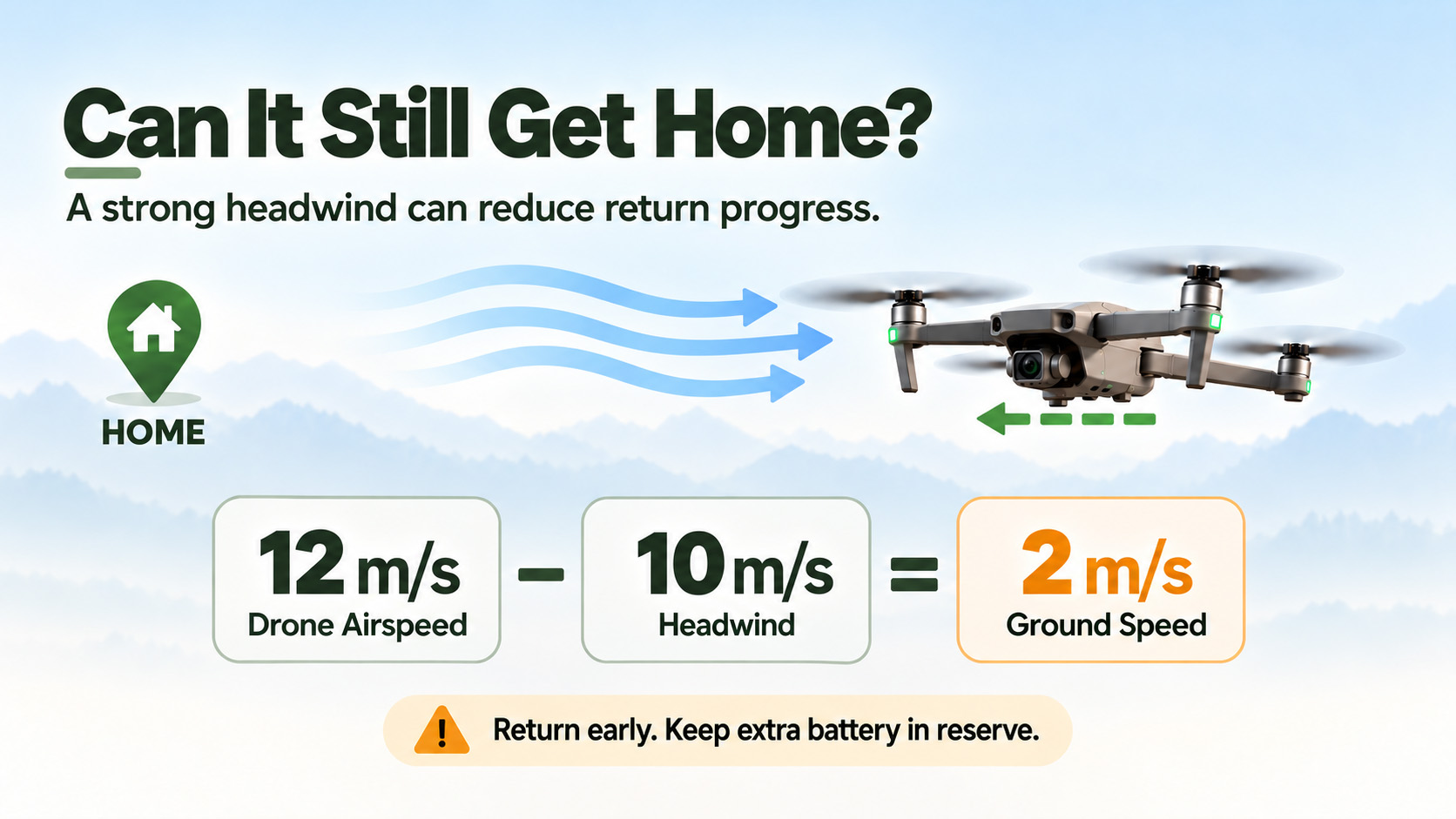
Weight alone does not determine wind resistance. Thrust, speed and flight control also matter.
Rated flight time vs. practical flying time
Wind, temperature, speed and battery condition affect endurance. Leave sufficient power to return and land safely. A multi-battery package provides more flying sessions, while a longer-lasting battery reduces interruptions.
Compare individual flight time
HS360D · Up to 40 min / batteryUp to 80 minutes across two batteries.
HS360E · Up to 30 min / batteryUp to 60 minutes across two batteries, with EIS for smoother footage.
Manufacturer-rated maximums, not measured flight times. Combined endurance requires battery changes.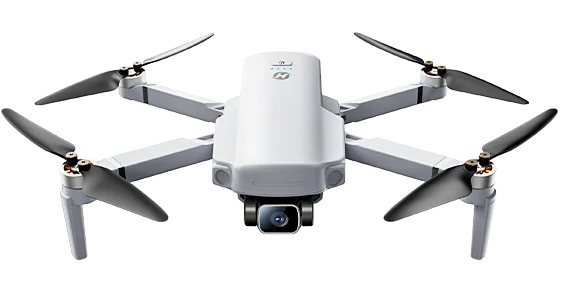
HS360D
- Up to 40 min per battery
- 4K for property and project records
- Standard camera: aircraft motion may be visible
249g · 4K/20fps · Up to 80 min (2 batteries)
View product →Pack for the trip, not just the flight
A compact drone is only one part of your travel equipment. Consider the controller, charging equipment, batteries, memory card and protective case. Check airline policies and destination rules; permitted spare lithium batteries must travel in carry-on baggage with terminals protected against short circuits under applicable U.S. rules.
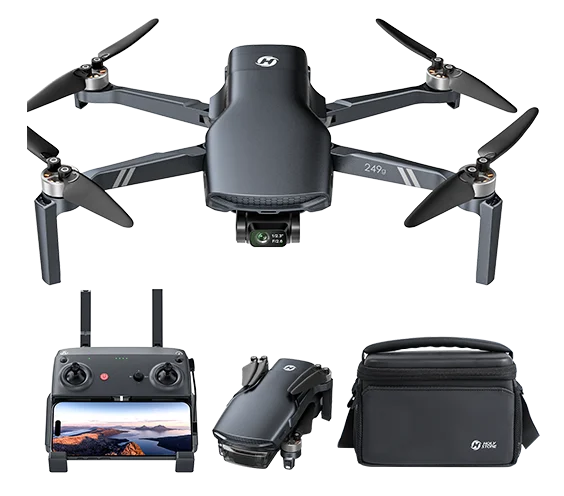
Pack the complete flying setup
- Aircraft & controller
- Charged batteries
- Compatible charging equipment
- Supported memory card
- Spare propellers
- Protective carrying case
Check destination flight rules and airline battery policies before departure.
FAA battery transportation guidance →Create beyond the basics
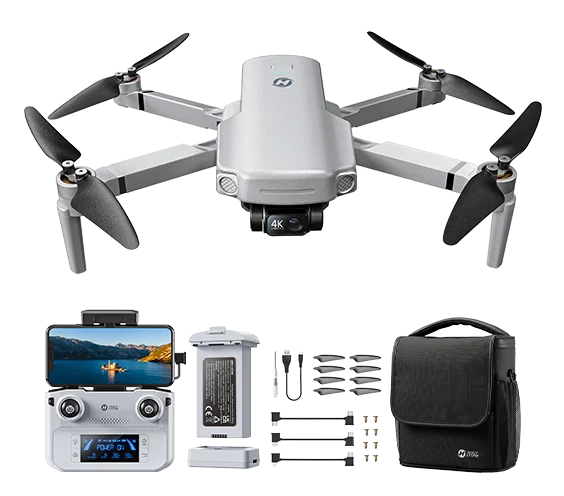
HS360G
- Three-axis mechanical stabilization
- Smooth scenic video
- Screen controller in supported kits
249g · 4K/30fps
View product →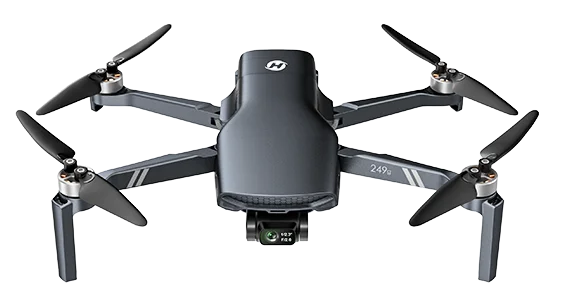
HS900
- 48MP Sony 1/2.3-inch CMOS sensor
- Three-axis mechanical gimbal
- Up to 6km control and FPV range
249g · 4K/30fps
Rated control range, not permitted flying distance.
View product →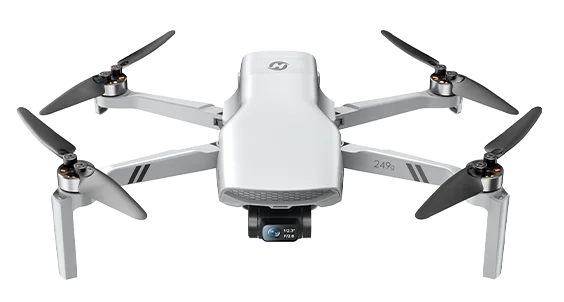
HS900 Pro
- 48MP Sony 1/2.3-inch CMOS sensor
- Three-axis mechanical gimbal
- Up to 10km control and FPV range
249g · 4K/30fps
Rated control range, not permitted flying distance.
View product →HS900 and HS900 Pro share a 48MP Sony sensor and three-axis gimbal. Their rated control and FPV ranges are 6km and 10km respectively. These are technical maximums under specified conditions, not permitted flying distances; maintain visual line of sight.
Capture the trip, not just the flight
Why it stands out: a compact 3-axis gimbal drone helps you capture landscapes more smoothly while staying easy to carry between locations.
Think about the next flight, too
Before buying, check compatible batteries, replacement propellers, charging equipment, manuals and technical support. Choose the battery package that fits your flying habits; there is no need to upgrade simply because a newer model exists.
Keep your drone ready for the next adventure
Already own a Holy Stone drone? Find compatible spare parts and support by model, even if you originally purchased through another retailer.
When is it worth upgrading your drone?
Upgrade when a specific limitation gets in the way of the experience you want—not simply because a newer drone exists.
When might a heavier drone be a better choice?
If you need specific wind-handling capabilities, larger sensors or specialized imaging features, compare heavier models such as HS600, HS600D or T60A. Neither weight category is always superior.
Explore all Holy Stone drones →Frequently asked questions
What is the best drone under 250 grams for beginners?
Among Holy Stone models, HS175D and Plus are accessible GPS starting points. Consider HS175G for EIS or HS360S for affordable onboard 4K.
Do drones under 250 grams need FAA registration?
The U.S. exemption applies to aircraft weighing 0.55 lb or less and flown exclusively under the recreational exception. Other rules apply.
Do I need TRUST for a drone under 250g?
Yes. U.S. recreational pilots operating under the recreational exception must complete TRUST and carry proof of completion, regardless of aircraft weight.
Do drones under 250g need Remote ID?
Generally not if exempt from registration and not registered. Registered aircraft and aircraft required to register must comply unless an applicable exception applies.
Can I use a sub-250g drone for commercial photography?
Yes, subject to applicable Part 107 pilot qualification, registration, Remote ID and operating requirements.
Which Holy Stone model has the longest flight time?
Among the models in this guide, HS360D has the longest stated single-battery maximum, 40 minutes under specified test conditions.
Can I fly a drone under 250g without a smartphone?
Supported screen-controller configurations such as HS175D MAX and HS360G Creator provide live view without your personal smartphone.
Are drones under 250 grams good for travel?
They can be. Consider the complete kit, charging needs, airline battery rules and destination flight restrictions.
About this guide
This Holy Stone brand guide draws on manufacturer documentation, FAA guidance and selected third-party reviews. Recommendations are organized by flying needs, not independent comparative laboratory testing. Product specifications, configurations and regional availability may vary.
For model-specific operating instructions, consult the corresponding product manual and current FAA guidance.
Start Small. Explore More.
Less Weight. More Possibilities.
Shop Drones Under 250gDare to Fly. Soar to Live.


COMMENTS