
 Sign in
 Sign up


What Makes a Drone Good in Wind? | Holy Stone
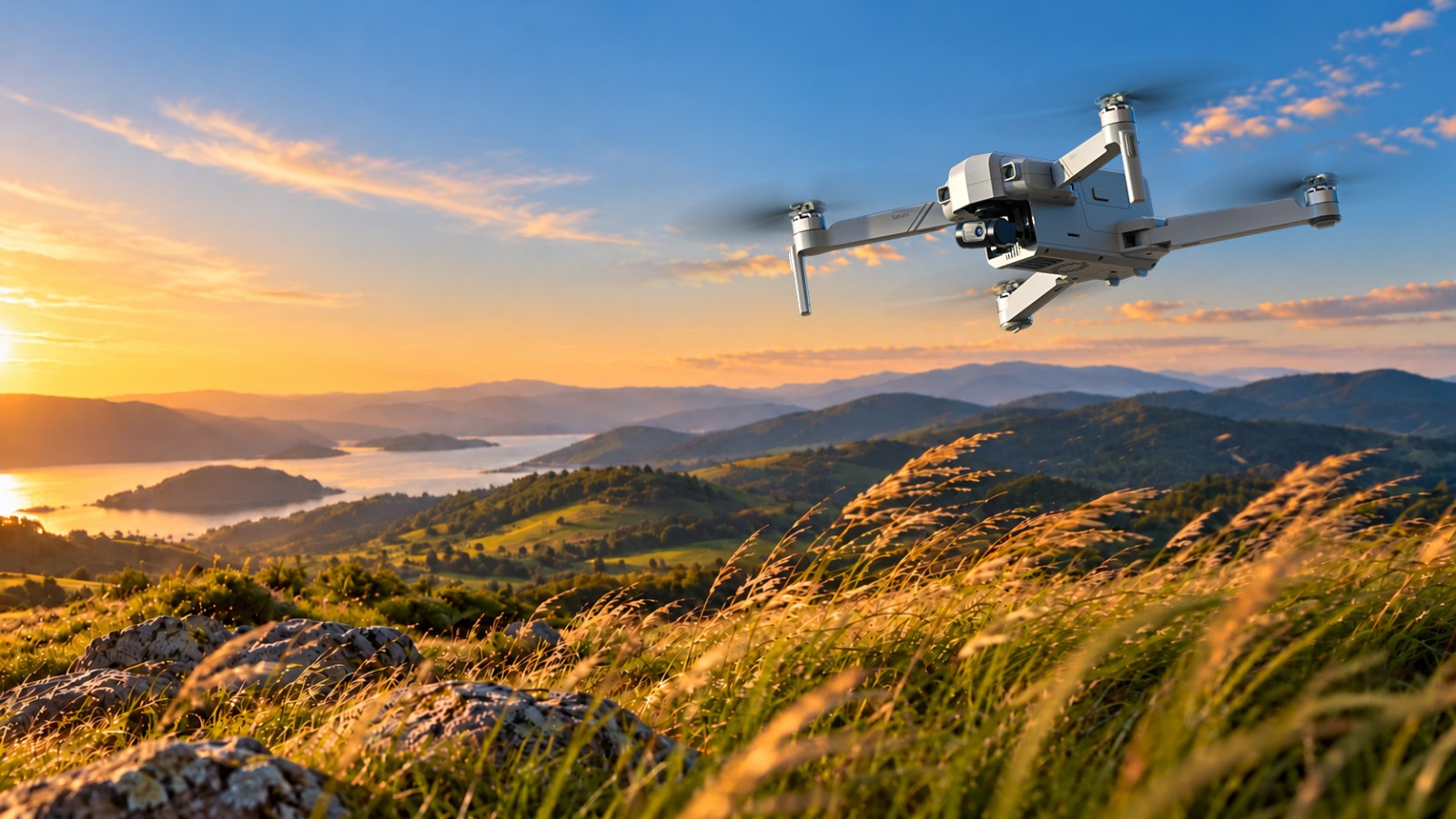
What Really Makes a Drone Good in Wind?
Weight matters—but it is only part of the story. Thrust, speed, drag, flight control, gusts and battery reserve all shape how a drone behaves outdoors.
Flying outdoors means dealing with conditions that can change quickly. A calm takeoff area can turn breezy once the drone climbs higher, and a light steady wind can feel very different when sudden gusts arrive.
That is why experienced pilots often look beyond a single wind-resistance number. A drone’s ability to handle wind depends on several things working together: available thrust, maximum flight speed, aircraft weight, aerodynamic drag, flight-control response, and battery reserve.
Understanding these factors can help you choose a more suitable drone for outdoor flying—and, just as importantly, help you know when conditions are becoming too demanding.
What Actually Determines a Drone’s Wind Performance?
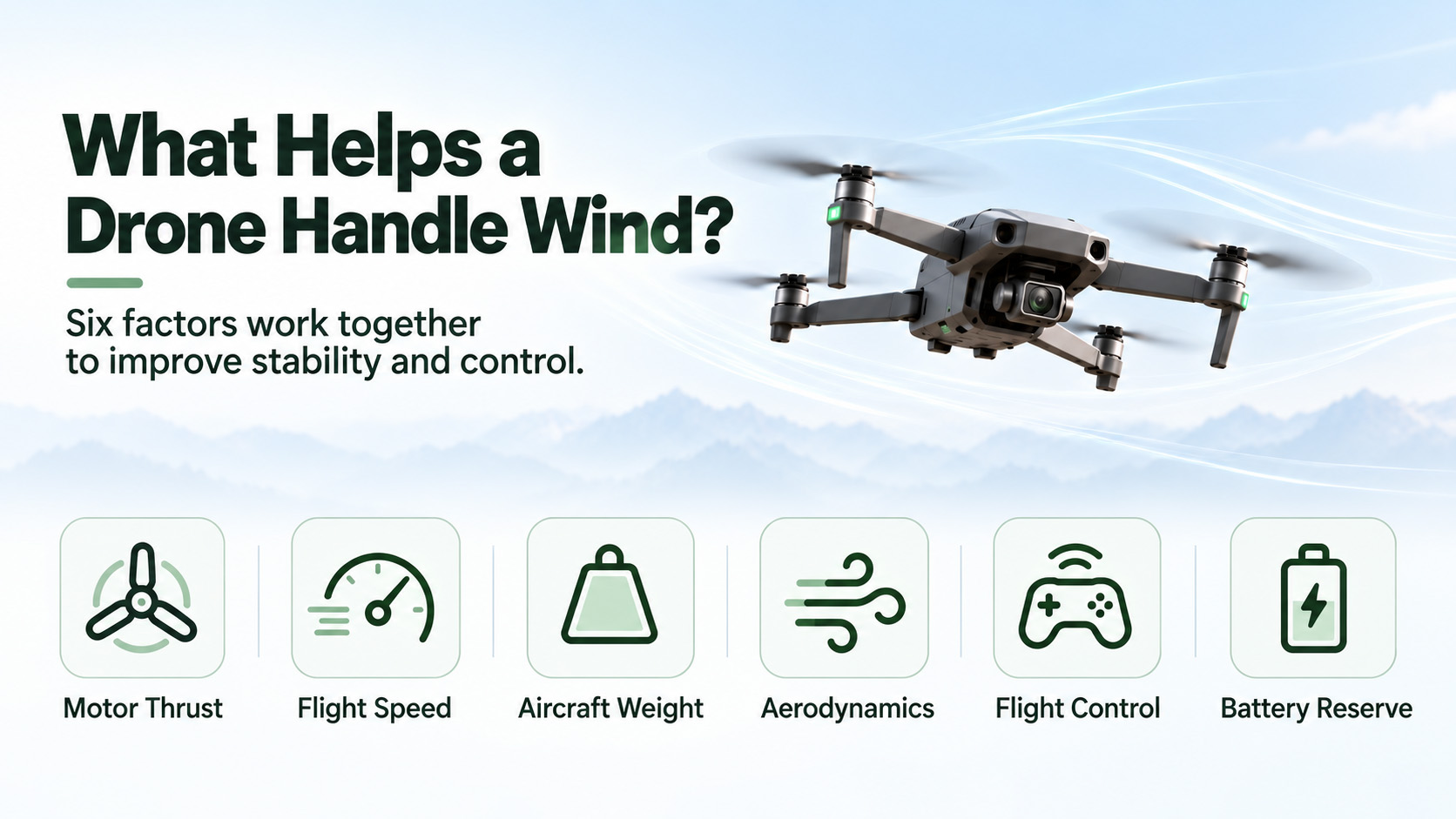
Wind performance comes from several systems working together—not from one specification alone.
Power & Thrust
When wind pushes a drone away from its intended position, the aircraft needs extra thrust to correct itself. More usable thrust gives the drone more room to resist wind and recover from gusts.
More thrust reserve usually means more control authority—but thrust-to-weight ratio should never be judged alone.
Speed & Headwind
A drone may still be moving quickly through the air while making very little progress over the ground. The closer the headwind gets to maximum forward speed, the less margin remains for a safe return.
The better question is not “Can it stay in the air?” but “Can it still get home?”
Weight, Drag & Control
Heavier drones often feel more planted because greater inertia resists sudden changes in motion. But airframe drag, propulsion, GPS and flight-control response matter too.
Stable outdoor flight comes from enough propulsion plus a control system that reacts accurately and quickly.
Gusts & Battery
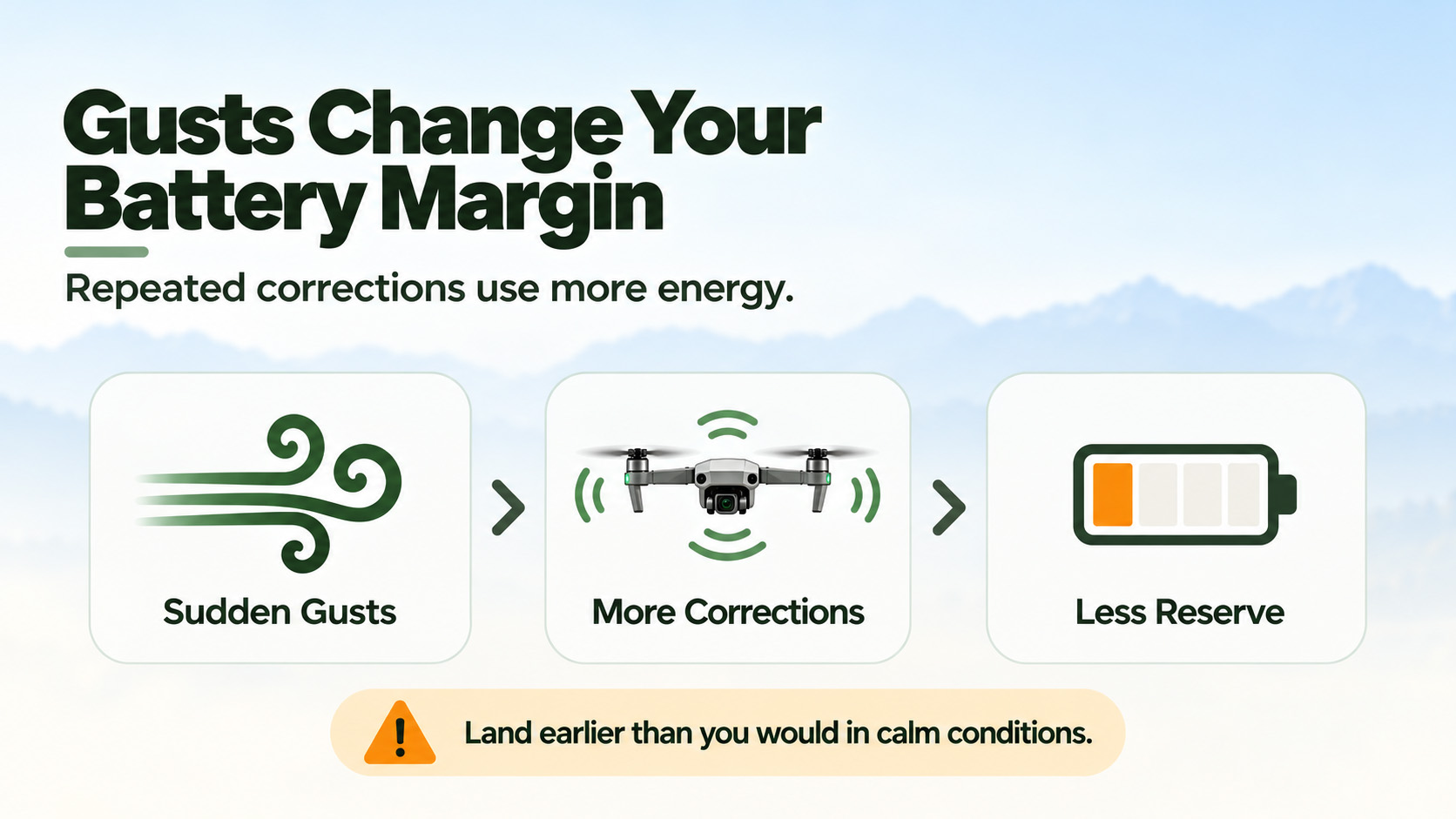
Sudden gusts require rapid corrections and can be more demanding than a steady wind of similar average speed. Those corrections also cost energy.
Check sustained wind and gust speed, and leave more battery reserve than you would in calm conditions.
Can the Drone Still Make Progress Back to You?
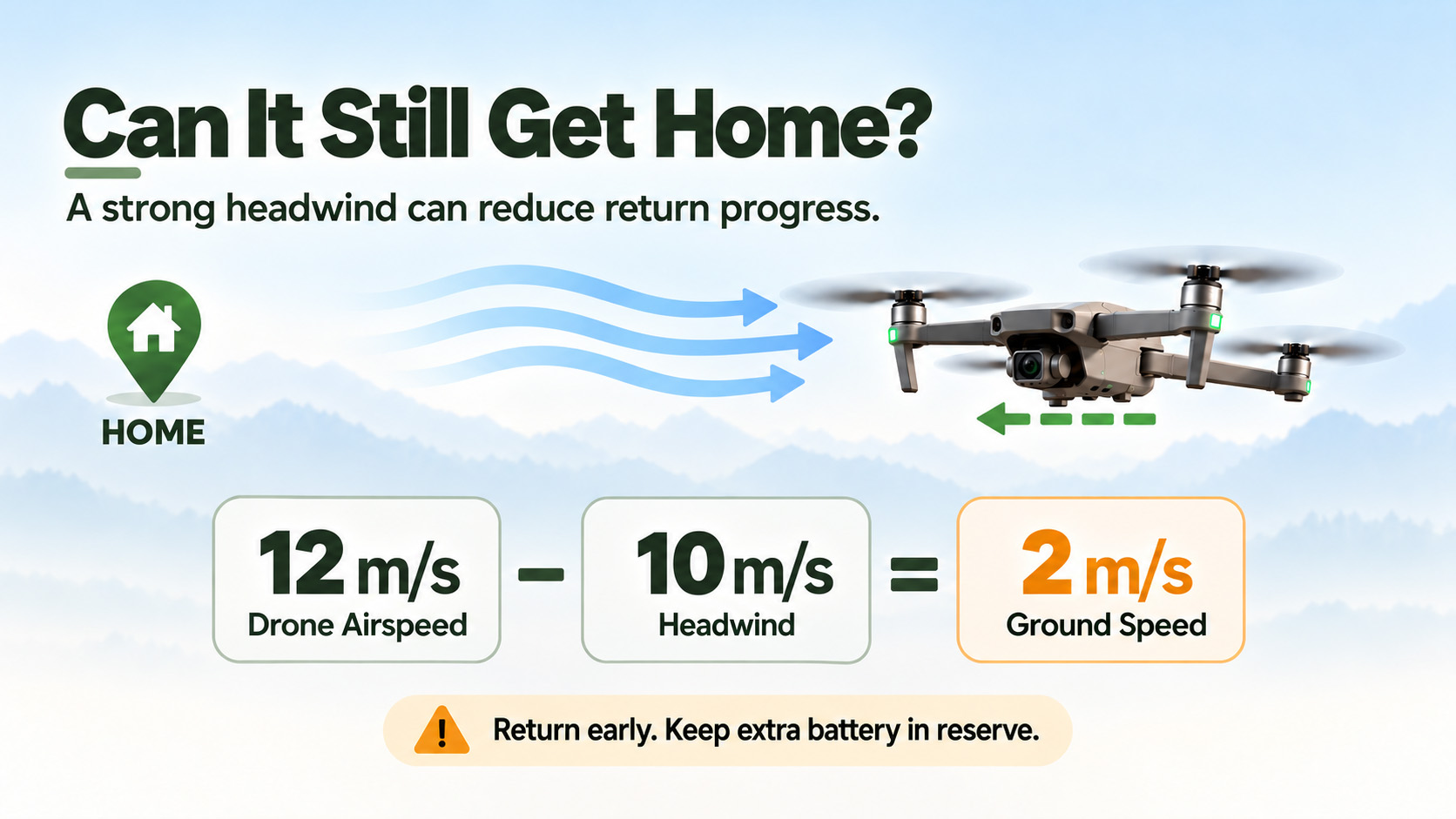
Headwind changes the return calculation.
Imagine a drone capable of flying at 12 m/s in still air. If it meets a 10 m/s headwind, its actual progress over the ground can become very slow.
This matters most over water, open fields, hills and coastlines, where an early landing may not be practical.
Gusts Can Be More Difficult Than Steady Wind
Wind also changes your battery margin.
In gusty conditions, the propulsion system may need to work continuously to counter drift, maintain position and recover from sudden changes in force.
That extra work can shorten practical flight time, especially if you also need to return against a headwind.
Check both sustained wind and gust speed, and keep more battery in reserve than you would on a calm day.
Choosing a Drone for Windy Outdoor Flying
Wind-handling capability
A useful starting point, but never the whole story.
Maximum horizontal speed
More speed margin can help when flying into a headwind.
Propulsion system
Efficient motors and propellers help the aircraft respond to changing conditions.
Weight & airframe shape
Weight affects inertia; shape affects how strongly the wind pushes the aircraft.
GPS & position holding
Accurate positioning helps the drone detect and correct drift.
Battery reserve
Wind increases power use, so flight-time margin becomes more important.
Camera stabilization
It does not create wind resistance, but it matters if you want smooth footage in breezy conditions.
Holy Stone Drones for Windy Outdoor Flying
If you often fly outdoors in breezy conditions, look beyond a single wind-resistance number. The following Holy Stone models combine different balances of weight, propulsion, GPS-assisted control, flight time and camera stabilization. Rather than ranking them against one another, choose based on where you fly, how much portability you need and what you want to capture.
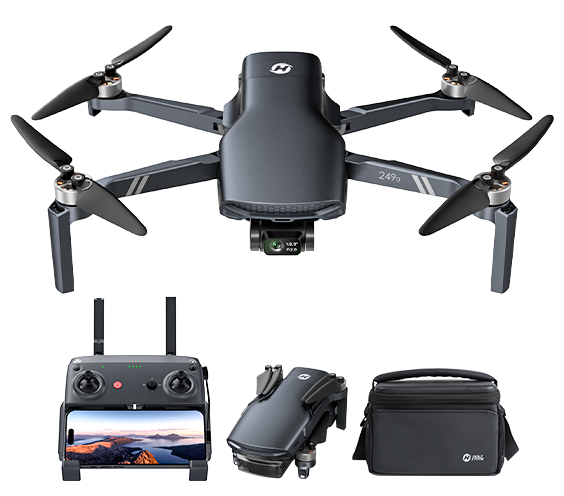
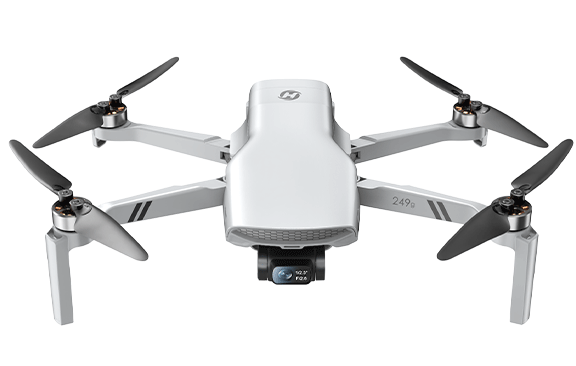
HS900
A practical lightweight option for pilots who want the core 4K gimbal-drone experience for landscapes, trips and everyday outdoor memories without carrying a larger aircraft.
Best for: casual aerial photography, travel, family outings and everyday outdoor flying.
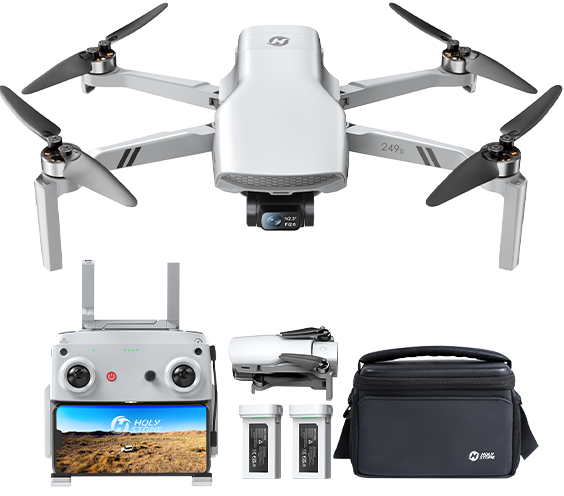
HS900 PRO
A creator-focused step up in the HS900 series, combining a sub-249g body with a Sony camera system, 3-axis gimbal and a broader set of assisted shooting tools.
Best for: hiking, road trips, travel creators and pilots who want more automated shooting options.
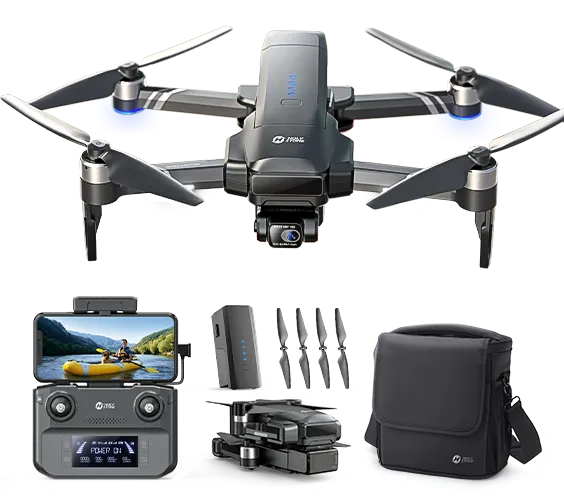
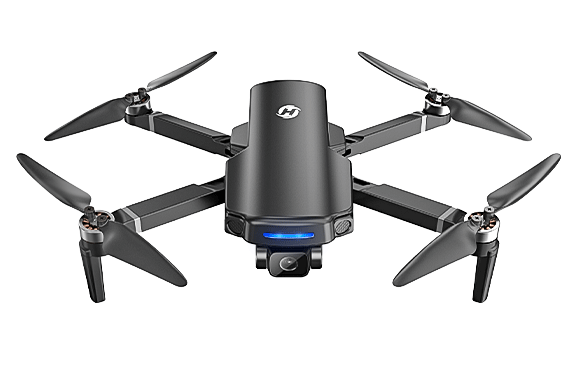
HS600
A substantial GPS drone for regular outdoor use, suited to flyers who value straightforward operation and a more planted feel over ultra-light portability.
Best for: open fields, countryside, property viewing and regular outdoor flying.
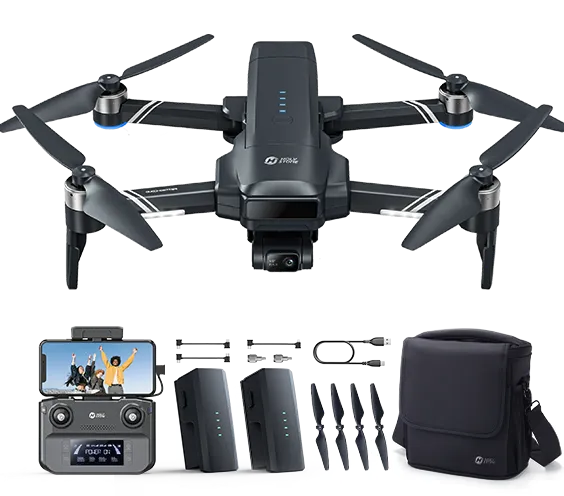
HS600D
Built for pilots who care about both confident outdoor flight and smoother footage, with a 3-axis gimbal, EIS and a Sony imaging system.
Best for: landscapes, farmland, outdoor inspections and longer filming sessions.
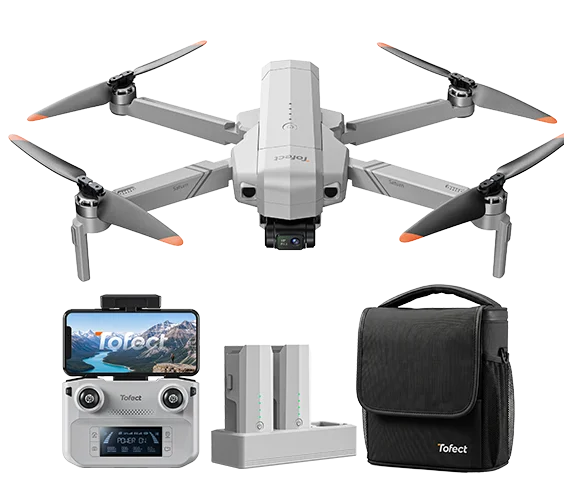
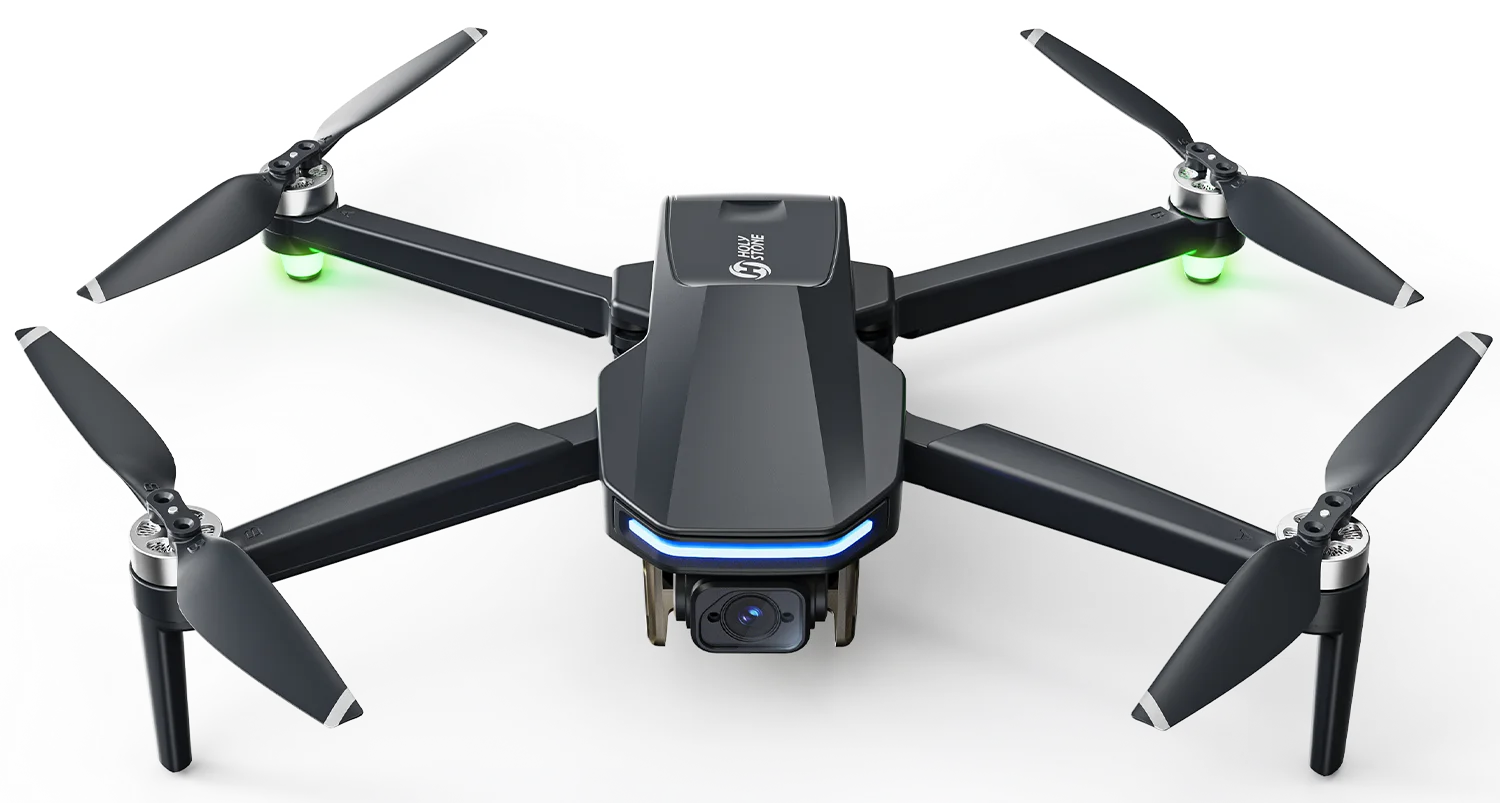
T60A
For creators who put image quality and creative flexibility first, combining a Sony imaging system, 3-axis stabilization and long-range outdoor capability.
Best for: mountains, coastlines, scenic road trips and outdoor filmmaking.
Before Every Outdoor Flight
Check both sustained wind and gust speed.
Remember that wind may be stronger above ground level.
Leave extra battery reserve.
Avoid turbulence near trees and buildings.
Consider flying into the wind first when practical.
Make sure Return to Home has enough battery margin.
Land early if the aircraft struggles to hold position.
Wind-Smart Flying Matters More Than Any Single Specification
Thrust, speed, weight, aerodynamic drag, flight control and battery reserve all contribute to how a drone behaves outdoors.
A drone’s wind-handling capability tells you what the aircraft is designed to cope with. Good decisions determine whether it gets home safely.
Questions Drone Pilots Debate Most About Wind
Does a heavier drone always handle wind better?
Not always. A heavier drone often feels more planted because greater mass and inertia make it less reactive to sudden gusts. But a heavier aircraft still needs enough thrust, speed and control authority to overcome wind and aerodynamic drag.
Are sub-250g drones automatically bad in wind?
No. Lightweight drones can be pushed around more visibly in gusts, but some sub-250g models still perform confidently outdoors when they have enough speed, efficient propulsion and responsive flight control.
Which matters more in wind: weight, thrust, or maximum speed?
There is no single winner. Weight affects inertia, thrust gives the aircraft correction authority, and maximum speed determines how much forward-speed margin remains in a headwind. Aerodynamic drag and flight control also matter.
Why do some pilots say thrust-to-drag matters more than weight?
Once a drone is airborne, wind is pushing against the airframe while the propulsion system is trying to generate enough force to maintain or change motion. Weight still affects inertia, but it does not directly cancel horizontal wind force by itself.
Are gusts more dangerous than a steady wind?
They can be more demanding. Gusts create sudden changes in force and direction, so the drone must react quickly. That can mean stronger corrections, more visible movement and higher power use.
Can Return to Home save a drone if the wind gets too strong?
Return to Home is useful, but it cannot overcome physics. If the headwind approaches the drone’s available forward-speed capability, the aircraft may make very slow progress. RTH also needs enough battery reserve to complete the trip.
Why can a flight feel calm near the ground but windy higher up?
Buildings, trees and terrain can shelter the takeoff area, while the drone may encounter stronger and less obstructed airflow as it climbs. Ground-level conditions do not always represent conditions at flight altitude.
Does flying in wind use noticeably more battery?
It can. The motors may need to work harder to hold position, correct drift and make progress into a headwind, reducing practical flight-time margin.
What should I do if my drone suddenly stops making progress against the wind?
Reduce risk early. If conditions and obstacles allow, consider descending to a lower, less exposed altitude, shorten the flight, or land in a safe reachable area rather than waiting until the battery becomes critical.


COMMENTS