

 Sign in
 Sign up


Propulsion & Airframe System – Drone Systems Explained 4
How Drone Propulsion & Airframe Systems Work
Understand how motors, propellers, airframe design and landing gear work together to create stable, responsive flight.
A drone stays airborne because its motors and propellers generate controlled thrust. The airframe holds these parts in position, while landing gear protects the aircraft during takeoff and touchdown.
These parts work together with the flight controller, ESCs and battery. This guide explains each system, what changes flight performance, and how different Holy Stone drones put the principles into practice.
How a Drone Propulsion System Works
A drone uses coordinated electrical and mechanical systems to generate lift, control movement, and maintain stability.
Follow the electrical side of this process in the power system.
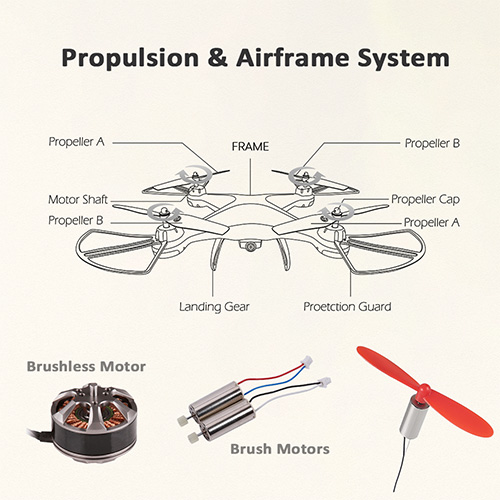
From power to flight
The battery supplies electrical power to the propulsion system.
The flight controller adjusts motor speed through the ESCs.
Spinning propellers create thrust, while differences in thrust control the aircraft’s attitude.
Motors
Convert electrical energy into rotation.
Propellers
Convert rotation into aerodynamic thrust.
Airframe
Supports components and maintains structural alignment.
Drone Motors: Power & Thrust
How motors turn electrical power into responsive flight.
What — What Is a Drone Motor?
A drone motor is an actuator that converts electrical energy into rotation. The motor spins a propeller to generate thrust; the flight controller and electronic speed controllers (ESCs) coordinate motor output to control movement.
Consumer drones commonly use brushed or brushless motors. Their construction affects efficiency, maintenance, cost and the types of aircraft they are suited to.
Brushed vs. Brushless Motors
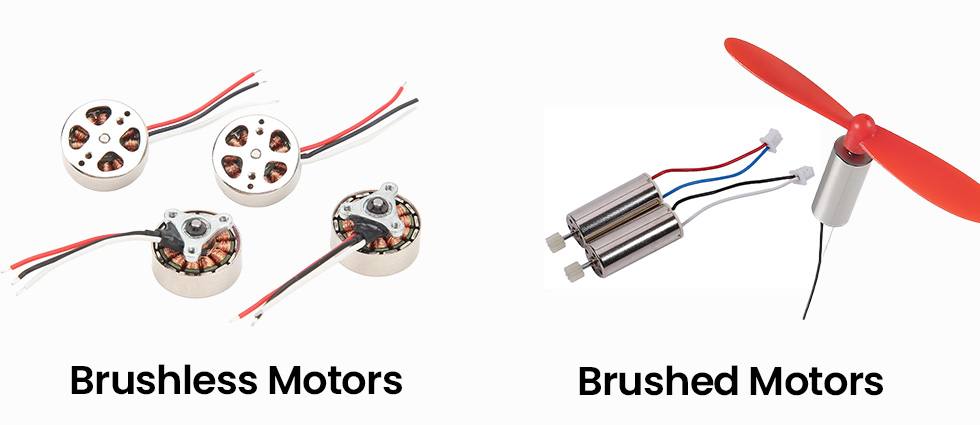
Brushed Motors
Mechanical commutation, usually lower initial cost, and common in lightweight toy-class drones.
Brushless Motors
Electronic commutation through an ESC, generally higher efficiency and longer service life, and common in modern camera drones.
| Comparison | Brushed | Brushless |
|---|---|---|
| Commutation | Mechanical brushes | Electronic control |
| Efficiency | Generally lower | Generally higher |
| Wear | Brushes wear over time | No brushes to replace |
| Typical application | Small toy drones | Camera and performance drones |
Why — Why Do Motors Matter for Flight?
Power & Thrust
Helps support climbing, acceleration and payload.
Wind Response
Provides thrust reserve for corrections in changing air.
Stability
Enables precise adjustments to rotor thrust.
Flight Time
Motor efficiency influences overall energy use.
Noise
Depends on the motor, propeller and operating speed.
Control
Responsive motor output helps execute flight commands.
How — How Do Motors Control Flight?
The flight controller sends commands to the ESCs, which regulate motor output. In a typical multirotor, coordinated changes in thrust control the aircraft's attitude and movement.
Increase total rotor thrust.
Reduce total rotor thrust.
Change relative rotor thrust to pitch forward.
Adjust the balance of rotor torque.
Extra — Understanding Motor Model Numbers
Codes such as 1503, 1806, 2204 and 2306 often describe the stator dimensions of brushless motors. For example:
typically 22 mm
typically 4 mm
Numbering conventions vary by manufacturer. Dimensions alone do not determine thrust, efficiency or flight performance; propeller choice, ESC ratings and aircraft design matter too.
Drone Propellers: Lift & Efficiency
How propeller design, rotation and condition affect lift, control and flight safety.
What — What Is a Drone Propeller?
A propeller is a rotating aerodynamic blade. Driven by the motor, it accelerates air downward and generates upward thrust. By adjusting thrust across the rotors, a multirotor drone can climb, hover and maneuver.
Three parts, three jobs
Correct Rotation & Installation
Multirotor drones use clockwise (CW) and counterclockwise (CCW) propellers in a matched arrangement. Install each propeller in its specified position and follow the markings in your drone's manual.
Incorrect placement or damaged blades can prevent takeoff or make the aircraft unstable.
Common Propeller Types
Different mounting and blade designs suit different aircraft. These categories can overlap.
Folding
Blades fold for compact storage; common on portable camera drones.
Fixed
Rigid blades used on many small drones and performance builds.
Quick-release
A mounting mechanism that makes compatible propellers easier to remove.
Why — Why Do Propellers Matter for Safe Flight?
Blade geometry and condition affect the thrust produced for a given power input.
Bent or chipped blades can create vibration that affects flight and footage.
Incorrect propeller size or pitch can increase motor and ESC load.
Spinning blades can cause injury. Keep clear during startup and flight.
How — How Do Propellers Control Flight?
Flight controllers change the relative thrust of the rotors to control the aircraft. The exact motor mixing depends on the drone's configuration.
Combined thrust balances weight for hover and increases for climb.
Differential thrust tilts the drone, creating horizontal acceleration.
Changes in opposing rotor torque rotate the aircraft around its vertical axis.
Frame & Arms: Structural Layout
How airframe geometry and rigidity support stable flight.
Learn how sensor feedback and control decisions support stable flight in the flight control system.
What — What Are the Frame & Arms?
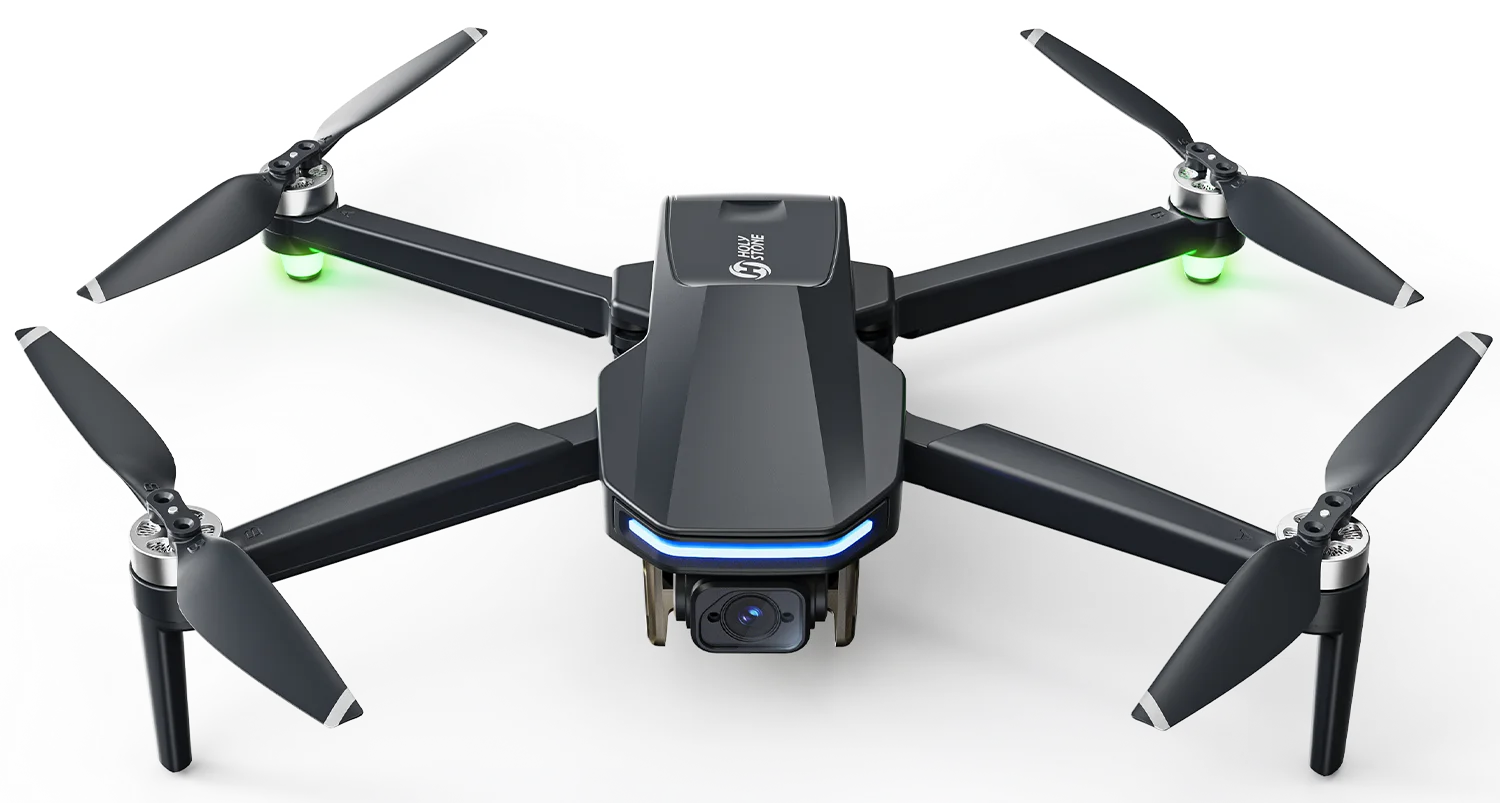
The frame forms the drone’s structural foundation, while its arms position and support the motors. Together, they hold the camera, battery, flight controller and other components in a balanced layout.
Why geometry matters
An X-type quadcopter positions four motors around the center of mass. The frame must keep these components securely aligned as thrust changes during flight.
A well-designed structure balances strength, weight, component protection and vibration control—not simply maximum rigidity.
Why — Why Does Frame Design Matter?
Structural stiffness and damping help limit unwanted vibration that can affect flight and footage.
Arm geometry and component placement influence handling, weight distribution and control response.
The frame supports electronics and helps protect wiring, cooling paths and vulnerable components.
How — How Does the Frame Protect the Drone?
The frame supports the camera, GPS module, flight controller and battery while transmitting loads through the structure. Its design can help manage landing forces, but impact resistance depends on the materials and construction.
Landing Gear: Ground Support
How landing gear supports safe takeoffs, landings and camera clearance.
Support on the ground. Clearance in the air.
Landing gear provides a stable contact point during takeoff and landing. Depending on the drone design, it also helps keep the camera and lower airframe clear of the ground.
Its shape, height and placement affect ground clearance and how the aircraft handles landing loads.
Why Landing Gear Design Matters
A suitable footprint helps reduce the risk of tipping on takeoff or touchdown.
Adequate clearance helps protect the gimbal and lens from ground contact.
Landing supports help manage contact loads and protect the lower airframe.
What Affects Thrust, Stability & Wind Performance?
Real-world handling depends on the propulsion system, airframe and flight control working together—not motor size alone.
Motors and propellers need enough available thrust to support the aircraft and respond to disturbances.
Blade geometry, diameter and operating speed influence thrust, energy use and noise.
Aircraft shape, weight distribution and control response influence stability in changing wind.
Propulsion & Airframe Systems in Practice
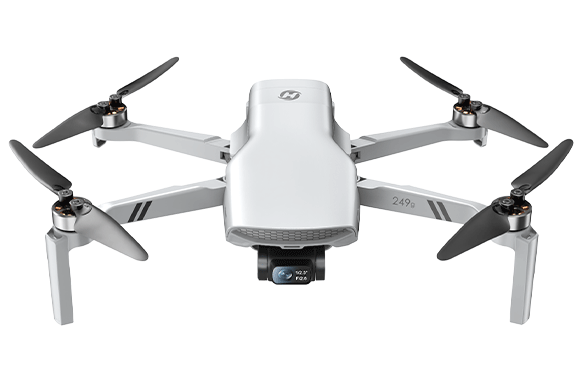
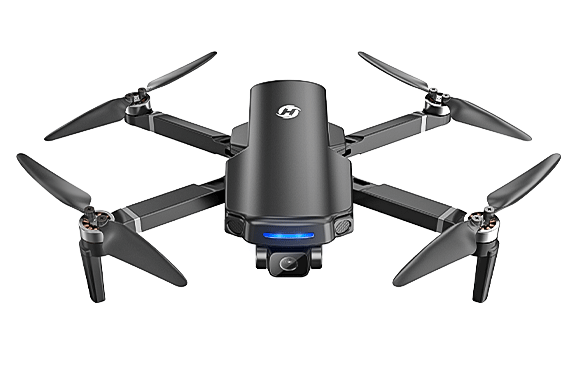
Two Holy Stone camera drones illustrate how different aircraft designs balance portability, flight stability and creative use.
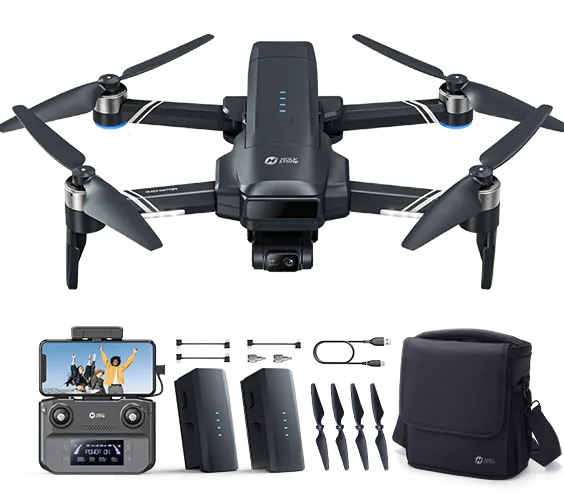
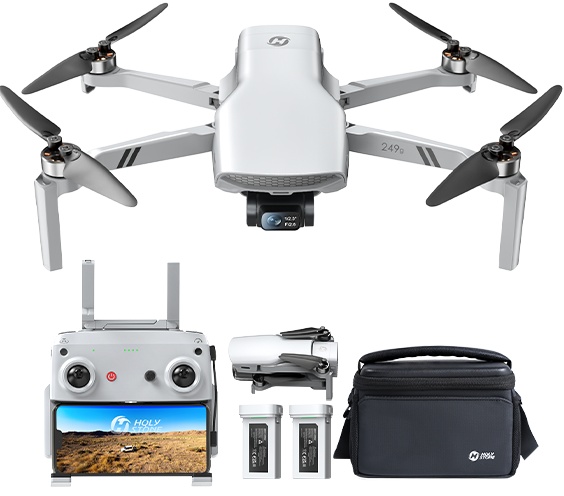
Product capabilities vary by model and conditions; check official specifications and local flight rules before flying.
Frequently Asked Questions
What is a drone propulsion system?
A drone propulsion system uses motors, propellers and electronic speed control to turn electrical power into thrust. The airframe supports these components and helps maintain stable flight.
What is the difference between brushed and brushless drone motors?
Brushed motors use physical brushes to commutate current, while brushless motors use electronic control. Brushless motors are commonly used in camera drones because of their efficiency, power and durability.
Why do drone propellers rotate in opposite directions?
Clockwise and counterclockwise propellers help balance reaction torque, allowing the flight controller to control yaw and maintain stable flight.
How does an airframe affect drone stability?
Frame rigidity, arm spacing, weight distribution and vibration control influence handling and camera stability.
Can I install any propeller on my drone?
No. Propellers must match the aircraft model, rotation direction and manufacturer specifications. Incorrect propellers can reduce stability or prevent safe takeoff.
Continue Exploring Drone Systems
Choose a system to understand how its components work with the rest of the aircraft.


COMMENTS