
 Sign in
 Sign up
Propulsion & Airframe System – Drone Systems Explained 4
Propulsion & Airframe System (Thrust & Structure System)
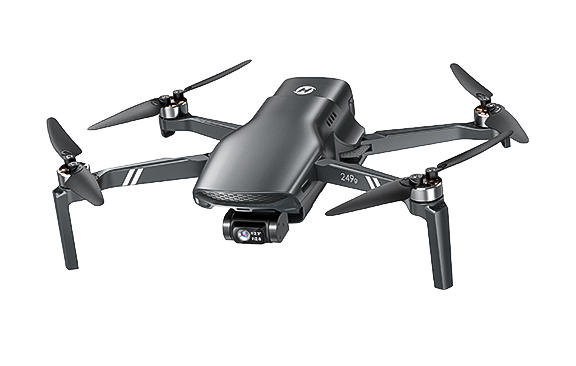
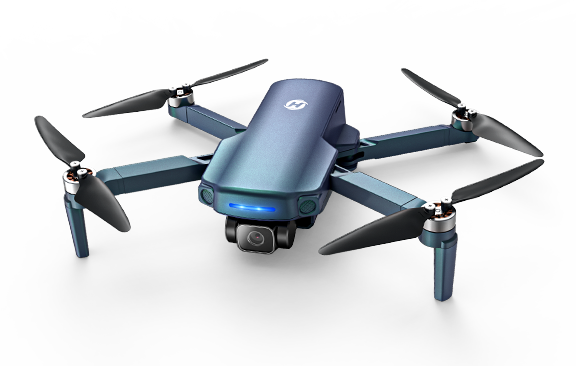
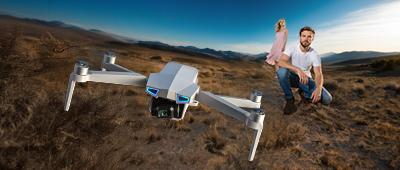
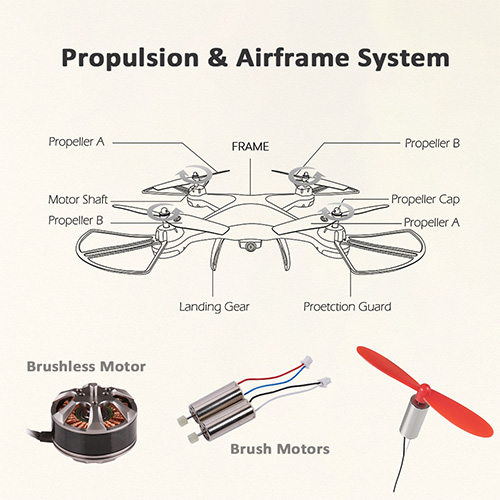
The drone’s Propulsion & Airframe System is the part that turns electrical power into thrust and safely carries all the hardware in the air. It includes the motors that generate thrust, the propellers that turn rotation into lift, the frame and arms that hold everything in place, and the landing gear that supports takeoff and landing. Together, these parts decide how strong the thrust is, how agile the drone feels, and how well it survives everyday bumps and landings.
Power & Thrust
Lift & Efficiency
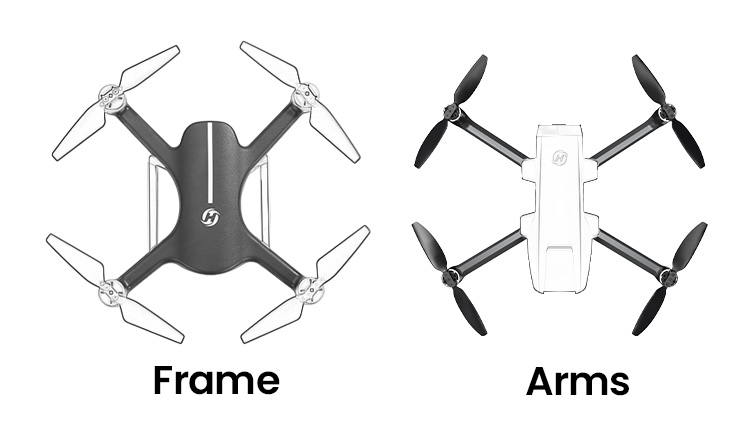
Structural Layout
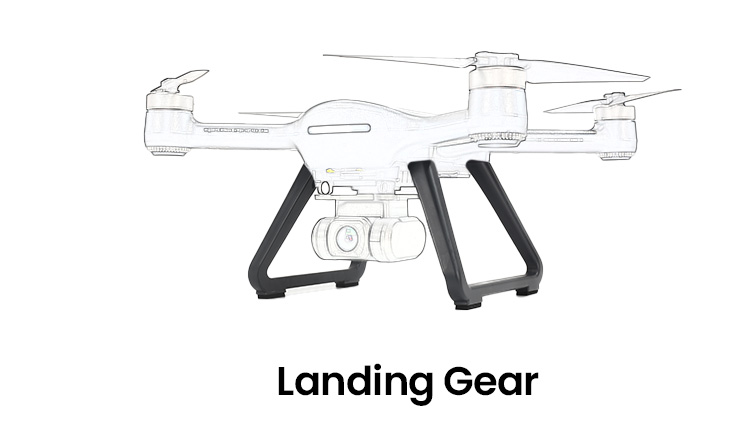
Ground Support
Part 1Drone Motors – Power & Thrust ↑ Back
What – What is a drone motor?
Motors = The power source that lifts and controls the drone
Drone motors spin the propellers at high speed to create lift, and by changing motor speed, drones climb, descend, turn, and hover. Motors work together with the flight controller, ESCs, and propellers to form the full propulsion system.
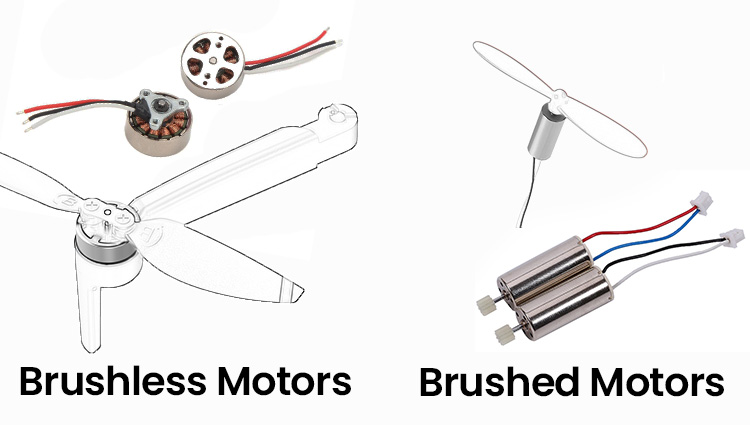
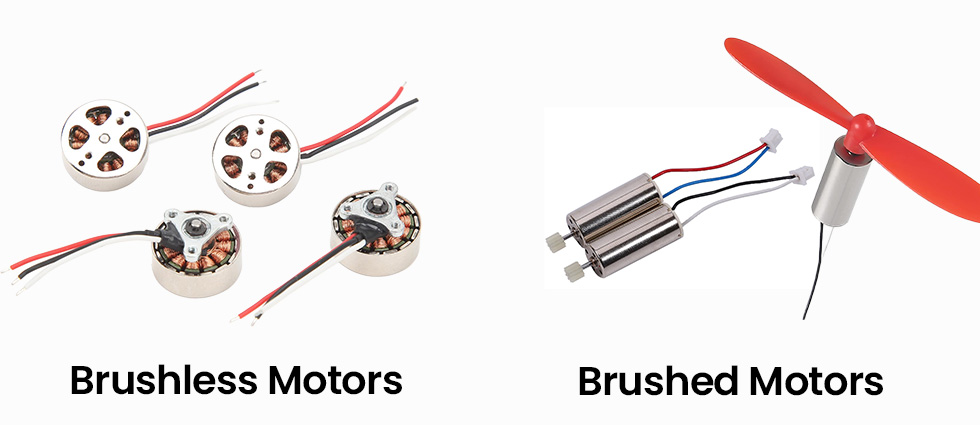
Consumer drones mainly use two motor types: brushed motors and brushless motors. They differ greatly in power, lifespan, noise, efficiency, and price.
Why – Why do motors matter so much for flying experience?
Power & thrust: Stronger motors climb faster, accelerate harder, and handle added weight such as gimbals or filters.
Wind resistance: Bigger motors + bigger props resist wind better outdoors.
Stability: Smooth torque output improves hovering and video.
Flight time: Efficient motors extend real flight endurance.
Noise: Brushless motors sound like steady wind; brushed produce buzzing.
Confidence: Strong motors respond faster and resist drifting.
How – How do motors work during flight?
The flight controller sends constant commands to the ESCs, which adjust motor RPM hundreds of times per second to create motion:
Climb → motors speed up
Descend → motors slow down
Forward flight → rear motors spin faster
Turn → motors adjust opposite speeds
Brushless motors + ESC act as a control pair: the ESC manages electrical timing, while the motor produces thrust.
Extra – Motor Types & Model Numbers
Brushed vs Brushless
Brushed: cheap, noisy, short-life, indoor toys.
Brushless: powerful, quiet, efficient → camera drones standard.
Motor Model Number Meaning
Motor codes like 1503 / 1806 / 2204 / 2306 represent physical size:
First 2 digits: stator diameter (mm) → power strength.
Last 2 digits: stator height (mm) → sustained torque.
Bigger motors support larger props, heavier drones, stronger wind.
Part 2Propellers – Lift & Efficiency ↑ Back
What – What is a Drone Propeller?
Propeller = The drone’s spinning wings
Propellers push air downward to create lift, allowing the drone to hover, climb, and move in all directions.
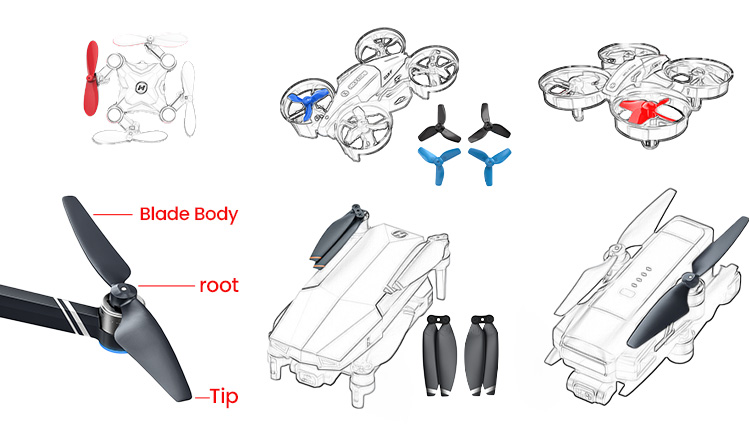
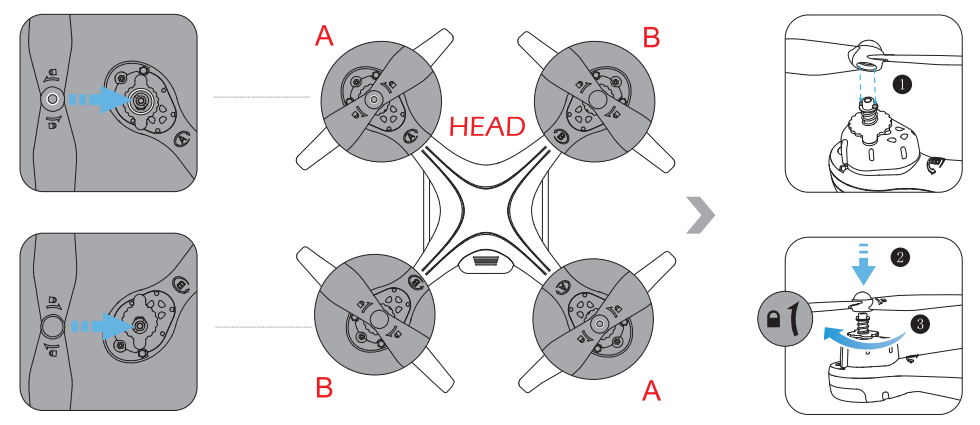
Propeller Structure
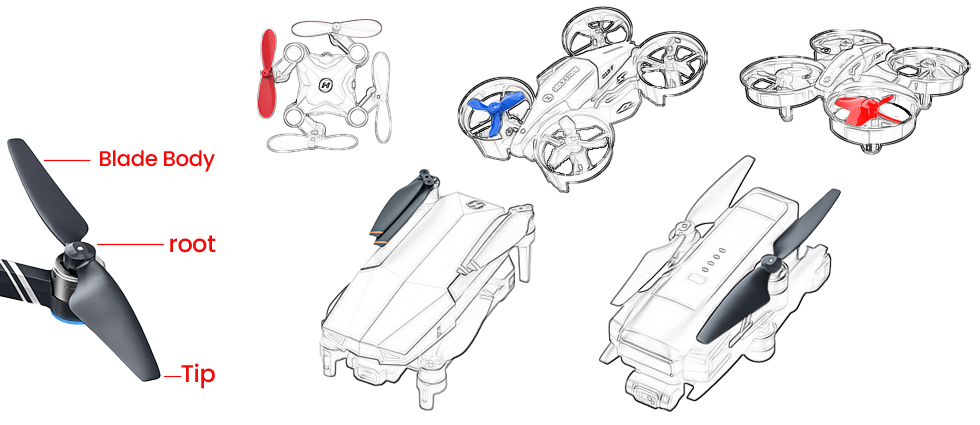
Root – connects to motor.
Body – generates lift through airfoil shape.
Tip – controls noise & efficiency.
Props must match rotation direction: CW & CCW.
Beginner Warning
Common Prop Types
| Type | Use | Description |
|---|---|---|
| CW / CCW pairs | All drones | Torque balancing system. |
| Folding props | Camera drones | Fold inward for storage. |
| Fixed props | Racing / DIY | Rigid & lightweight. |
| Quick-release props | Modern camera drones | Push-and-twist locking hubs. |
Why – Why are propellers critical for safe flight?
Even with perfect electronics, bad propellers ruin flight.
All thrust comes from props → any damage harms lift & stability.
Fragile part → often damaged in landing and crashes.
Safety risk → moving blades can injure hands or face.
Tuning conflict → wrong props overload motors & ESC.
How – How do propellers work in flight?
Propellers act like rotating wings: speed controls lift and directional movement.
Hover: equal thrust on all props.
Forward/Side motion: thrust imbalance tilts drone.
Yaw rotation: CW vs CCW thrust changes rotate the body.
Care Tips
Part 3Frame & Arms – Structural Layout ↑ Back
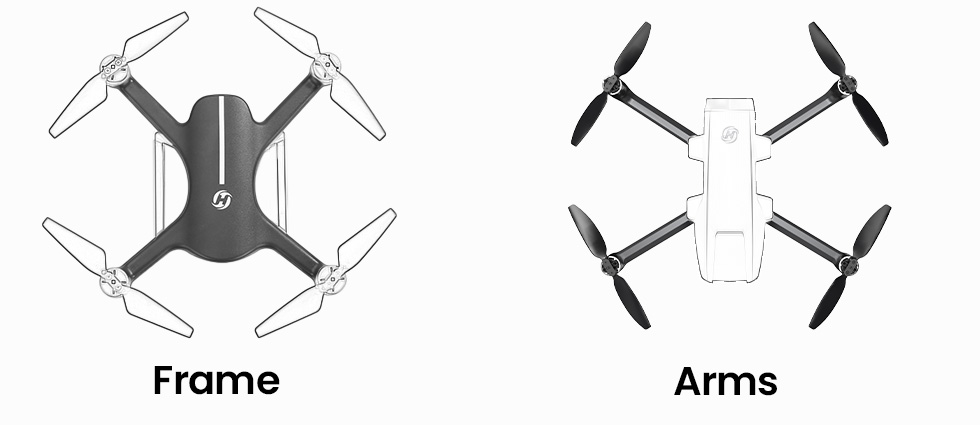
What – What are the frame & arms?
Frame & Arms = The skeleton that holds everything
The frame is the drone body; the arms hold the motors. Together, they form the drone’s physical structure and determine layout such as X-type quadcopter geometry.
Why – Why does frame rigidity matter?
Reduces vibration → improves camera stability.
Arm spacing controls stability & agility.
Better layout protects wiring & cooling.
How – How does the frame protect the drone?
The frame holds all components—including camera, GPS, FC, battery—and absorbs landing forces to protect internals.
Part 4Landing Gear – Ground Support ↑ Back
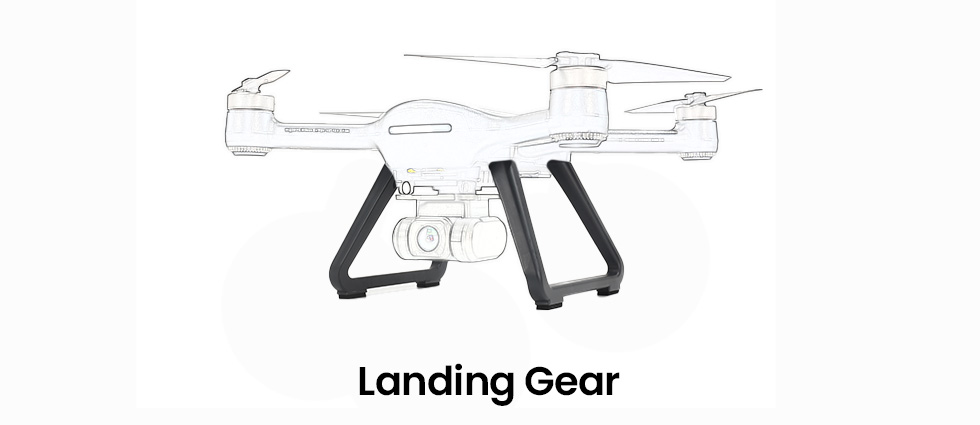
What – What is landing gear?
Landing Gear = Drone feet
Landing gear supports the drone during takeoff and landing, protects props and camera from ground contact.
Why – Why does landing gear design matter?
Spreads landing force → prevents tipping.
Protects gimbal & camera clearance.
Improves ground stability on uneven surfaces.
How – How should pilots protect landing gear?
Land on flat surfaces, avoid grass and rocks. After a hard landing, check for cracks or bends to avoid imbalance or camera scratches.


COMMENTS